
Types of chamomile
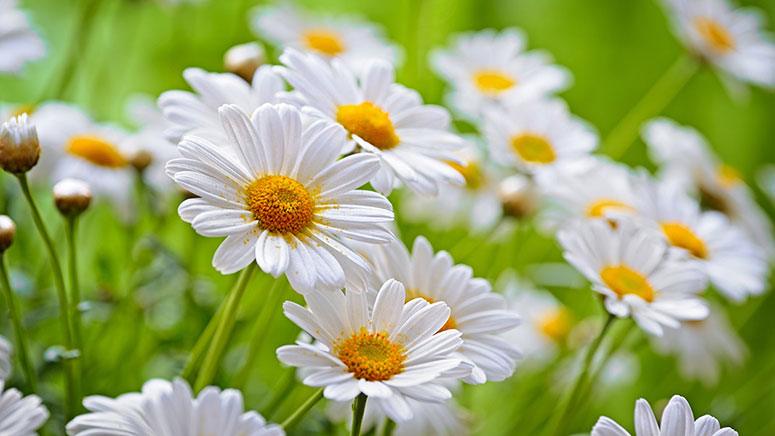
There are two main types of chamomile, they include:
- German chamomile (Maricaria recutita)
- Roman chamomile (Anthemis nobilis)
According to Engelman, three main chemical compounds make chamomile beneficial to the skin and health.
- chamazulene
- matricin
- bisabolol
Engelman says “German chamomile contains higher levels of chamazulene and bisabolol [than Roman chamomile], which makes it generally considered the more efficacious form of chamomile and is more widely used in skin care products.
You might also see blue chamomile on skin care labels; it is an extraction from German chamomile oil.
Because chamazulene is formed during the distillation process, you won’t find it in the fresh flower itself. The oil’s hue is based on the amount of chamazulene present and how it was extracted.
There is also the blue tansy, which is a related plant, but not the same as blue chamomile.
While you can find yellow and green German chamomile oils, it is best to opt for blue chamomile since it has a higher concentration of chamazulene.
Conclusion
Chamomile is a significant ingredient in many skin products, such as creams or soaps, and this is due to the numerous benefits it provides for the skin. Some of these includes treating inflammation, healing wounds, and soothing sensitive skin. This article will discuss with you details on its benefits and the effect they have.
References
[1] https://www.healthline.com/health/hyperpigmentation
[2] https://nationaleczema.org/eczema/
[3] https://www.mayoclinic.org/diseases-conditions/acne/symptoms-causes/syc-20368047
[4] https://dermnetnz.org/topics/bacterial-skin-infections
[5] https://www.ncbi.nlm.nih.gov/pmc/articles/PMC2833428/