
Sunscreens
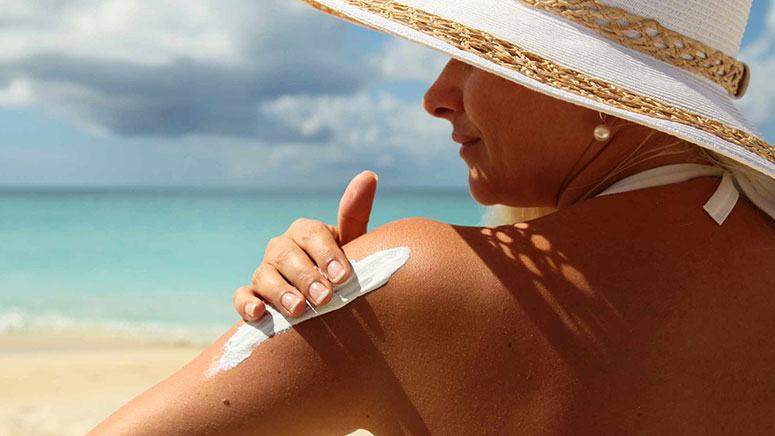
Sunscreens and sunblock are commercial preparations that impede UV light when you use them on your skin. They have an SPF rating depending on the sunscreen’s ability to prevent sunburn. The higher the SPF rating, the more protection from UVB rays you can expect, and the less direct skin damage that should occur.
The sunscreen should also provide protection from UVA radiation. UVA radiation does not lead to sunburn, but it does contribute to skin aging and an increased risk of skin cancer. Many sunscreens provide broad-spectrum protection, meaning that they protect against both UVA and UVB radiation.
The American Academy of Dermatology recommends that you use a sunscreen with:
- an SPF of 30+
- UVA and UVB protection
- water resistance
Sunscreen should be applied as follows:
- Use plenty to cover the body — most people only use 25–50% of what they need.
- Pay attention to the tops of the ears, the feet, the neck, and other places that are easy to forget.
- Apply 15 minutes before exposure.
- Apply to dry skin.
- Reapply every 2 hours or after swimming or sweating.
- Use a lip balm with SPF 30+.
- Check any instructions on the packaging before use.
As a result of concerns that have been raised about damage to the environment, some countries are now banning sunscreens that are not reef-friendly. Sunscreens can be damaging in other ways, too, but some choices are less harmful. Experts recommend:
- opting for products that have micro-sized or non-nanoparticles, as these are less toxic than nanoparticles
- Apply a lotion rather than a spray or misting sunscreen, as lotions are less likely to be harmful to human health
- Picking one with the smallest amount of plastic and packaging necessary
- finding a sunscreen that does not have the polluting substances stated on the HEL list