
How is aortic dissection treated?
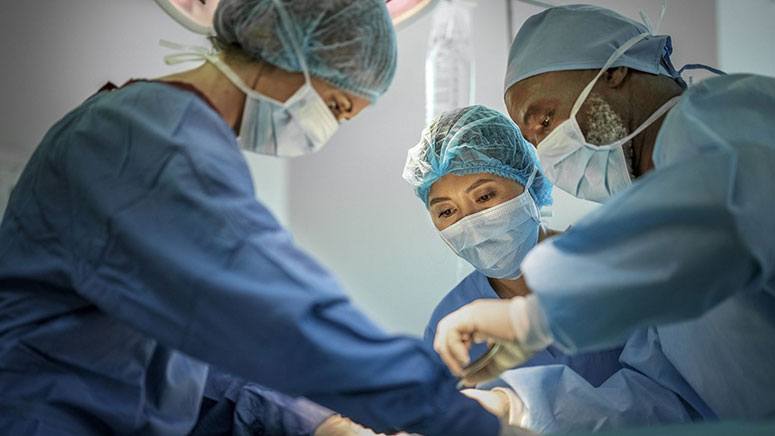
Aortic dissection should be treated as an emergency medical condition. The mortality rate can be as high as 76% within the first 48 hours after dissection if it is left untreated.
Surgery
Surgery is the most common treatment for type A aortic dissections. Open-heart surgery is usually done to repair the dissection and damage while boosting blood flow. Your surgeon may make a surgical incision to the chest or abdomen to fix the aorta. In some cases, you may get a prosthetic ascending aorta or a prosthetic valve.
Endovascular surgery is the most popular surgical method for type B aortic dissections. It is done to repair the aorta or place a stent, which is a hollow tube in your body to get rid of a blocked pathway. Endovascular surgery is not as invasive as open-heart surgery. The procedure can also be performed for people with a complicated form of type B aortic dissection.
Hybrid approach is a combination of conventional open surgery and Endovascular stent-graft technique. It is used to repair the aorta. It is also used when the repair must get to the aortic arch where vessels to the brain and arms originate. Hybrid approach can be performed during the emergency operation for Type A dissection or as a two- stage repair with a bypass from a vessel in the neck to help set up an endovascular repair for Type B dissection.
One of the most popular hybrid procedures is known as the “elephant trunk” or “frozen elephant trunk” procedure. In this procedure, the segment of the aorta close to the heart and the aortic arch (the segment of the aorta that sends blood to the brain) is replaced and repaired. A stent graft or additional graft is left hanging into the descending aorta, like the trunk of an elephant. The graft can receive the endovascularly placed stent-graft when the second surgery is done.
You may have to remain in the hospital after the procedure so your doctor can monitor your progress and check for possible complications, such as acute kidney injury and stroke.