
Types of Ischemia
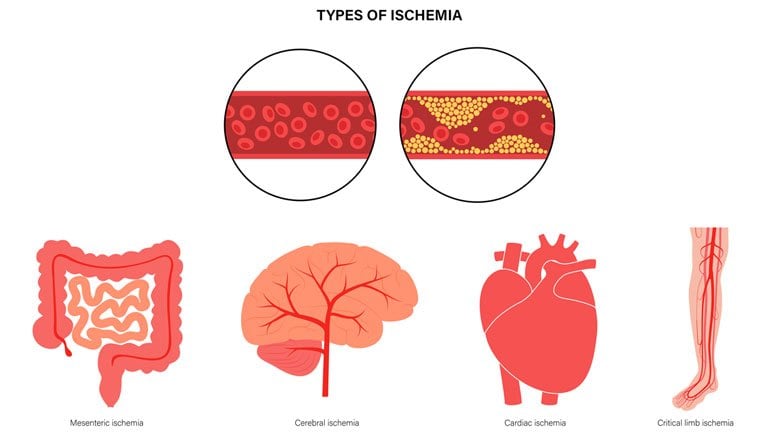
Ischemia generally refers to a blocked blood vessel, so there are not many types of ischemia. However, there are different names to describe which body part is affected. For example:
- Cerebral ischemia is reduced blood flow to the brain. There are 2 types of cerebral ischemia: Focal ischemia, which refers to inadequate blood flow to a certain region of the brain [in the form of a stroke or transient ischemic attack (TIA)] and Global ischemia, which involves large areas of brain tissue.
- Cutaneous ischemia is reduced blood flow to the skin.
- Cardiac ischemia is also known as ischemic heart disease and myocardial ischemia, is decreased blood flow and oxygen to the heart muscle.
- Mesenteric ischemia is decreased blood flow to the intestines.
- Ischemic colitis is a decreased blood supply to the large intestine (colon).
- Critical limb ischemia, a type of peripheral artery disease, which occurs when there is reduced blood flow to the intestines.
- Cyanosis is a purplish or bluish discoloration of skin that occurs due to low blood oxygen (hypoxia) and circulatory disorder.
- Gangrene is tissue death that occurs due to lack of blood supply.
Some researchers divide ischemia into only two types, embolic and thrombotic:
- Thrombotic ischemia occurs when the blockage occurs in an artery that supplies blood to an area or organ like the brain
- Embolic ischemia occurs when a blood clot or plaque formed at one part of the body breaks off and flows in the blood to another body site and then lodges in an artery body site breaks off and flows in the blood to another body site and then lodges in an artery (example – femoral artery produces clots that flow in the blood and then block small arteries that supply the toes)