
Testicular cancer
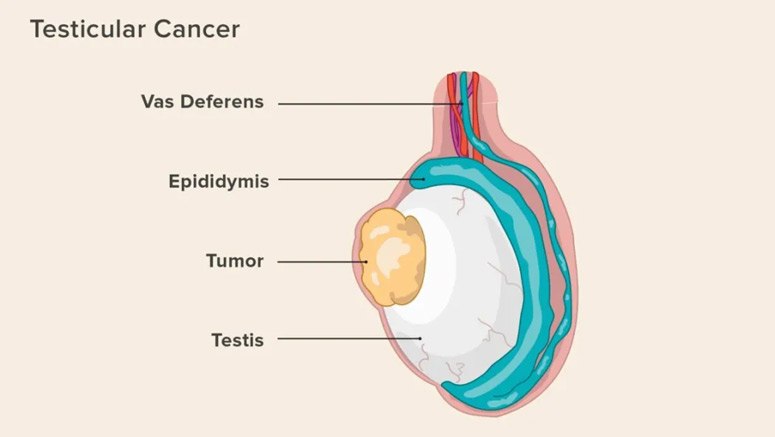
There are sperm cells in the testicles, and the vast majority of testicular cancers begin in sperm cells. Testicular cancer has become very common among men, it is more common among men between ages 20 and 40 years old. It most commonly develops in one testicle, but in two percent of cases, it can happen in both testicles.
A very common symptom of testicular cancer is a painless lump that grows in the testicles. Other common symptoms include:
- Testicle pain
- A dull dragging sensation in the scrotum
Less common symptoms include:
- A dull ache in the lower abdomen.
- Back pain.
- Lower leg swelling.
- Bone pain.
- Breast swelling.
There are also some risk factors of testicular cancer, some of which include:
- Age: Testicular cancers occur most commonly between the ages of 15 and 55 years, and is the most common type of cancer for men between the ages of 20 and 40.
- Race: testicular cancer is more common among caucasian men, they are 3.6 times more likely to get testicular cancer than are African-American men and are 2.5 times more likely to get testicular cancer as Asian-American men.
- Having an undescended testicle (cryptorchidism): This is a condition in which one or both testicles do not descend from the abdomen into the scrotum.
- Family history: If you have a family history of testicular cancer your risk of having testicular cancer is higher.
Testicular cancer is quite rare, but still highly treatable. Treatment options for testicular cancer include:
- Surgery: The surgeon removes the cancerous testicle through a cut in the groin. In more advanced cases, they may also remove some of the lymph nodes in the abdomen as well.
- Radiation therapy: This involves the use of radiation to damage and destroy the cancerous cells.
- Chemotherapy: Your doctor will recommend medications to either kill the cancerous cells or stop their growth.
The earlier testicular cancer is detected, the higher the chance of recovering from it, just as with any other type of cancer. If testicular cancer is detected before it spreads beyond the testicle, the cure rate is as high as 99%. Even if it spreads to the lymph nodes and to other parts of the body, with treatment the long term cure rate is in the range of 80% to 90%.
Early detection is very important. To detect testicular cancer early, you would need to constantly conduct testicular self-examination [3].