
What are the risks of epidural anesthesia?
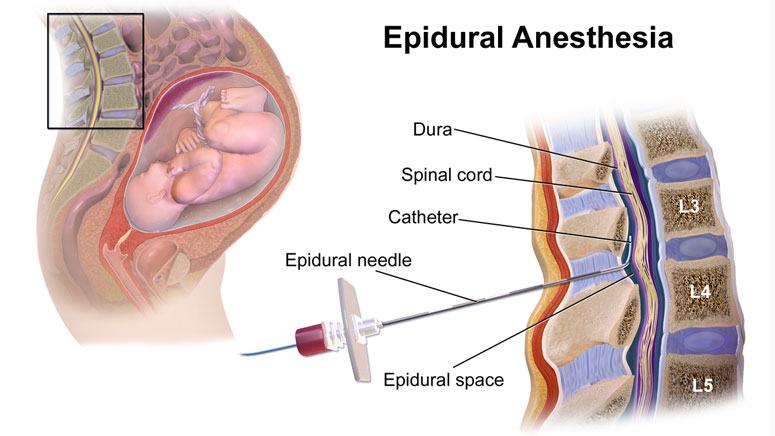
There are many risks of this medication, they include:
- You have to remain still for 10 to 15 minutes while the epidural is put in, and then wait up to 20 minutes before the drug starts to work.
- Epidurals can lead to a sudden drop in blood pressure. For this reason, your blood pressure will be frequently checked to help ensure sufficient blood flow to your baby. If there is a sudden reduction in blood pressure, you may need to be treated with IV fluids, medications, and oxygen [3].
- You may feel a serious headache caused by leakage of spinal fluid. About 1% of women have this side effect. If symptoms continue, a procedure called a “blood patch”, which is an injection of your blood into the epidural space can be performed to treat headaches [4].
- After your epidural is inserted, you will have to change sides while lying in bed and have continuous monitoring for changes in fetal heart rate. In some cases, Lying in one position can cause labor to slow down or stop.
You might also experience these side effects: shivering, a ringing of the ears, backache, soreness where the needle is inserted, nausea, or difficulty urinating. You might discover that your epidural makes pushing more difficult and other drugs or interventions may be given such as forceps or cesarean.
The lower part of your body will feel numb after giving birth. In some cases, permanent nerve damage [5] may occur in the part where the catheter was inserted.
Studies show that some babies will be unable to “latch on” causing breastfeeding concerns. A baby might also have respiratory depression, fetal malpositioning, and an increase in fetal heart rate [6] variability, thus increasing the need for forceps, vacuum, cesarean deliveries, and episiotomies.