
Diabetic retinopathy
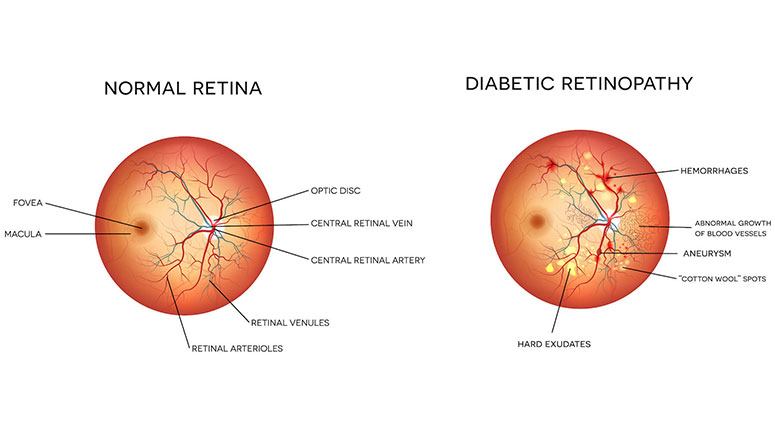
People diagnosed with diabetes have higher chances of developing diabetic retinopathy. If the blood glucose level is not well regulated over time, it could also increase the risk of having diabetic retinopathy.
Healthy blood glucose levels and blood pressure, and regular eye checks can reduce the chances of having diabetic retinopathy but it does not treat it.
Diabetic retinopathy can be seen in any type of diabetes and in any age. The best way to avoid it is by having regular eye checks, so it can be observed and treated early.
There are four stages of diabetic retinopathy, they include
- Stage 1: mild non-proliferative diabetic retinopathy
- Stage 2: moderate non-proliferative diabetic retinopathy
- Stage 3: severe non-proliferative diabetic retinopathy
- Stage 4: proliferative diabetic retinopathy
In most cases, the symptoms of diabetic retinopathy don’t manifest until it has reached stage 4. Symptoms at this stage are:
- Eye floaters
- Loss of vision
- Color changes in vision
- Distorted vision
- Difficulty seeing at night
- Blurry vision
It is impossible to completely treat diabetic retinopathy, but its symptoms can be managed with treatment.