
Prevention
Preventing blood from clotting is often better and easier than treating embolism. If you center attention on preventing the formation of a clot in the deep veins (especially of the legs), you might have decreased your risk of pulmonary embolism by far. You can do this while in a sitting position without having to stand up.
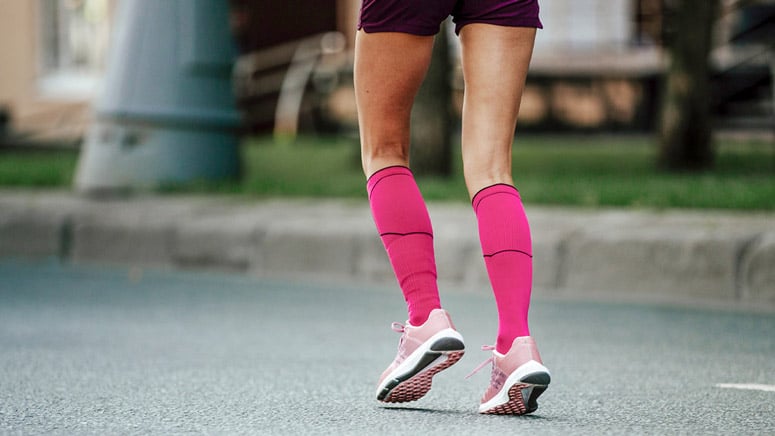
- Wearing compression socks: wearing a pair of compression socks help to press against the deep veins and cause the blood in them to flow more freely and faster. This alone, markedly removes the risk for blood to clot.
- Using blood thinning agents (anticoagulants): This is often administered to patients who are about to undergo surgery, especially if there is a chance of blood clotting during or after the procedure. It is also given to patients with heart diseases, stroke or cancer.
- Increasing your level of physical activity: Exercise and other forms of activity help to push blood and get your circulation functioning properly. This is one of the reasons surgical patients may be asked to get moving or walking even on the day of their surgery.
- Elevating your legs at night or as a form of exercise can help effectively in preventing blood clotting.
- Applying pneumatic compressions, with inflated cuffs which are calf-high or thigh-high to compress or massage the legs several times a day. This method is effective for preventing deep veins thrombosis. [5]
Reference:
[1] https://www.healthline.com/health/pulmonary-embolus
[2] https://www.mayoclinic.org/diseases-conditions/pulmonary-embolism/symptoms-causes/syc-20354647
[3] https://www.lung.org/lung-health-diseases/lung-disease-lookup/pulmonary-embolism/symptoms-diagnosis
[4] https://www.webmd.com/lung/pulmonary-embolism-symptoms
[5] https://www.mayoclinic.org/diseases-conditions/pulmonary-embolism/symptoms-causes/syc-20354647