
Managing and Treating Poison Ivy
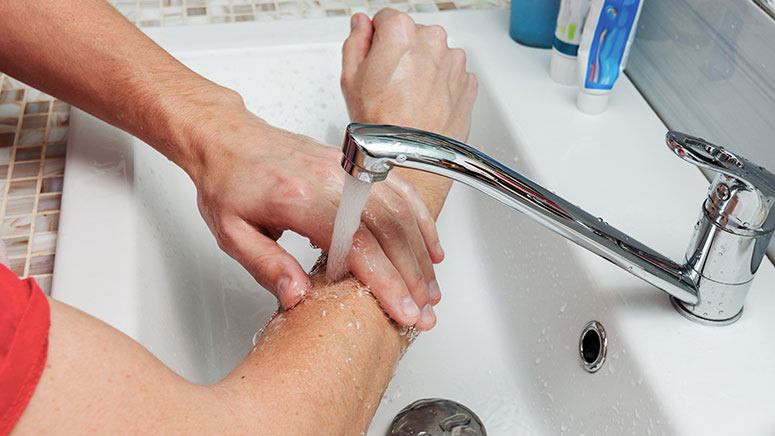
You can get rid of poison ivy in one day. But there are certain ways to provide quick relief for yourself. They include:
- Rinse: it will help to rinse your skin with soapy, lukewarm water as soon as possible. If you don’t wash off the urushiol oil it can spread to other parts of your body and other people.
- Wash your clothing and everything else: wash all of your clothes immediately to get rid of urushiol oil that may have stuck to it. Also wash anything that may have come into contact with the oil, including gardening tools, pets, and camping gears.
- Don’t touch or scratch the blisters: touching or peeling the blisters as tempting as it can be will only worsen your situation and lead to an infection.
Rashes from poisonous plants typically disappear on their own in a week or two. To alleviate the itching rash caused by poison ivy, over-the-counter (OTC) drugs are recommended in the interim:
- Anti-itch lotions: Calamine lotion (Caladryl® [4]) and hydrocortisone (Cortizone® [5]) are two examples of poison ivy creams. Use topical astringents containing aluminum acetate (Burow’s Solution® or Domeboro® astringent solution) for blisters that begin to leak or drain.
- Antihistamines: Drugs like diphenhydramine [6] (Benadryl®) are classified as antihistamines.
If the poison ivy rash gets worse or appears on the mucous membranes of your mouth, nose, eyes, or genitalia, your doctor could recommend treating it. They might suggest using an oral steroid like prednisone.
If a secondary infection occurs, your doctor might also recommend treatment for it.
Conclusion
It is difficult not to scratch an itchy poison ivy rash. Fortunately, most rashes disappear within a week. Your doctor can recommend treatment to help ease the itching and always remember not to scratch. Scratching will give way for bacteria to enter your skin and cause an infection.
References
[1] https://my.clevelandclinic.org/health/diseases/17413-rashes-red-skin
[2] https://www.nhs.uk/conditions/blisters/
[3] https://www.aocd.org/page/PoisonIvyDermatiti
[4] https://www.webmd.com/drugs/2/drug-61524/caladryl-hydrocortisone-topical/details
[5] https://www.webmd.com/drugs/2/drug-89053/cortizone-10-plus-topical/details
[6] https://www.webmd.com/drugs/2/drug-1428/diphenhydramine-oral/details