
What are the types of scoliosis?
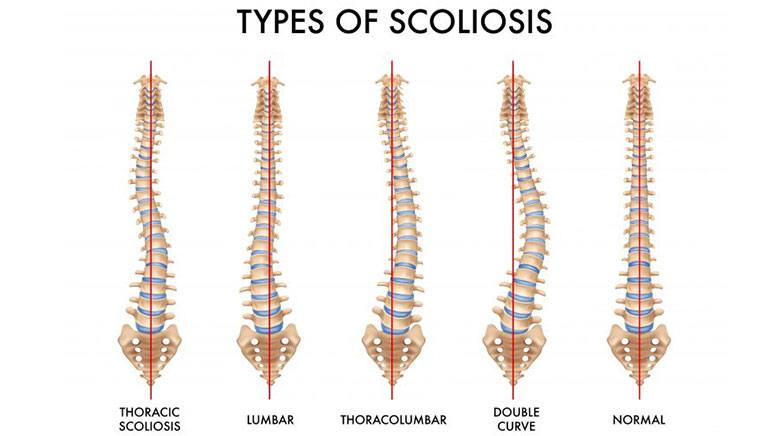
- Idiopathic scoliosis: The cause or origin of this type of scoliosis is unknown. It is the most common type of scoliosis. It mostly occurs in teenagers, where it is called adolescent idiopathic scoliosis. When scoliosis occurs for unknown reasons in adults who have never had the condition, it is known as de novo scoliosis.
- Congenital scoliosis: In this type of scoliosis, bones in the spine are abnormally curved sideways at birth.
- Neuromuscular scoliosis: This type of scoliosis is characterized by a separate, systemic condition affecting the nervous system or muscular system, such as cerebral palsy, paralysis, muscular dystrophy, and neurofibromatosis. It usually develops into a complex curvature, like an overlapping kyphosis condition.
- Degenerative scoliosis: This type of scoliosis occurs due to wear and tear on discs or spinal joints.
The conditions listed above are all types of structural scoliosis, which occurs when bones are incorrectly formed to develop an S-curve in the spine that is fixed and cannot be straightened by adjusting body position.
Nonstructural scoliosis on the other hand occurs when the curvature is temporary and not caused by a malformed vertebrae in the spine but by a different condition that affects posture, like leg length discrepancy or skeletal dysplasia [1].
Scoliosis can occur in of the three major sections of the spine:
- Cervical spine (neck)
- Thoracic spine (chest and upper back region)
- Lumbar spine (lower back)