
Diagnosis of Toxoplasmosis
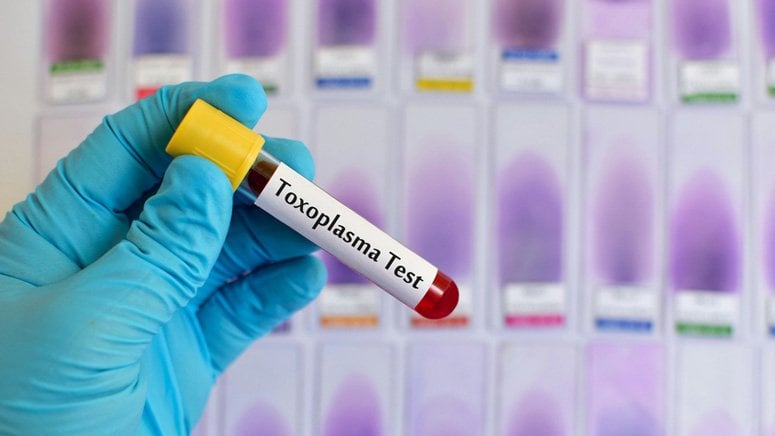
Your healthcare provider will undergo a physical exam for you and ask about your symptoms as part of diagnosing your condition. They may also need to undergo blood tests, biopsies, imaging (CT scan or MRI), a lumbar puncture or, if you’re pregnant, amniocentesis or ultrasound.
Some necessary tests include:
- Blood tests: Blood tests are almost always performed to diagnose toxoplasmosis. This is done to search for parts of the parasite I’m your blood and search for antibodies to T. gondii.
- Biopsy: Your healthcare provider may take a small amount of tissue and send it to a lab to look for signs of T. gondii.
- Imaging: A CT scan or MRI may be done to see if there are any changes that indicate toxoplasmosis.
- Lumbar puncture [4]: If your healthcare provider suspects that you have toxoplasmosis in your brain or spinal cord, they may perform a lumbar puncture. This procedure involves the use of a needle to draw cerebrospinal fluid (CSF) from your lower back. It will be sent to a lab to look for signs of T. gondii.
- Amniocentesis [5]: This is mostly recommended for pregnant women that have been diagnosed with toxoplasmosis. Your provider uses a small needle to collect cells from the fluid surrounding the fetus. It will be sent to a lab to look for signs of T. gondii.