
Types
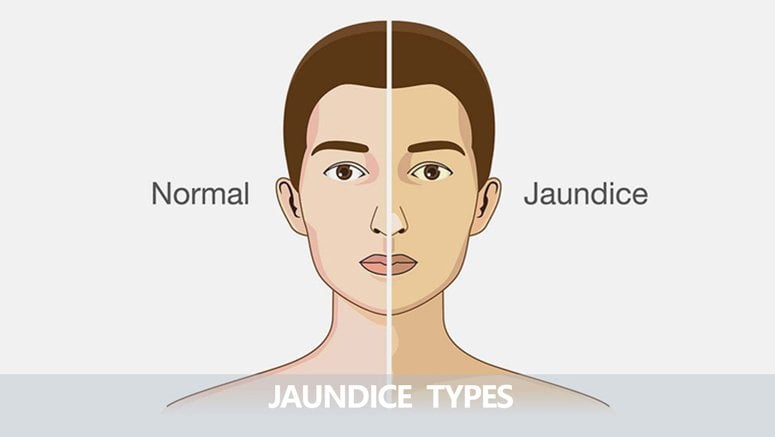
Jaundice has different types of pathogenesis and etiology in adults. The classification is extensive, but it is necessary to highlight the main types of jaundice.
- hemolytic (pathological destruction of erythrocytes/red blood cells);
- Hepatocellular (hepatic);
- cholestatic (extrahepatic)
Other jaundice type is jaundice in newborns [4], which is also one of the commonest forms of jaundice. It is, however, usually a normal physiological occurrence. It arises due to the liver’s inability to metabolize and eliminate bilirubin, as it is still underdeveloped. It is generally not a cause for concern, and treatment is done with phototherapy.
The hemolytic form of jaundice develops as a complication of other diseases due to the rapid destruction of erythrocytes and difficulty in removing bilirubin. For example, this form of jaundice threatens patients with leukemia, anemia, and malaria.
Hepatocellular (hepatic) jaundice is caused by damage to hepatocytes (liver cells) and bile capillaries, for example, in acute viral infections, chronic and toxic hepatitis. The reason for an increase in the concentration of bilirubin in the blood is damage and necrosis of part of the functional cells of the liver. In this Jaundice type, the cells of the liver lose their ability to perform their normal function which is to transfer conjugated (direct) bilirubin into bile against the concentration gradient. Generally, the functionality of the cells and the efficiency of the liver as a whole is impaired. It’s different from other types of the disease as it is characterized by the formation of spider veins on the skin.
Cholestatic jaundice is characterized by increased pressure in the biliary system, as well as the inability to transport bilirubin from the liver to the intestine. Obstructive jaundice, for example, occurs when the ducts are blocked by stones or neoplasms, and the flow of bile is impaired.