
Musculoskeletal Manifestations
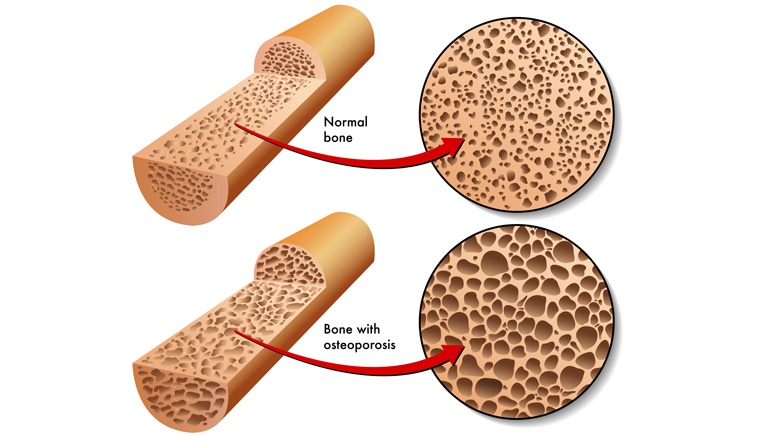
Hypercortisolism [7] will promote a greater suppression of the formation and acceleration of bone degradation, causing osteopenia, that is, the loss of bone mass, in more than half of the patients with the syndrome. These patients then have a higher risk of developing osteoporosis and suffering bone fractures, especially in the feet, ribs and vertebrae.
However, these bone effects are also due to the presence of other factors resulting from the condition of hypercortisolism, such as decreased levels of calcium in the body, due to the decrease in intestinal absorption and hypercalciuria. Therefore, all patients must supplement calcium and vitamin D in order to avoid complications from osteopenia.
Hypogonadism, which may be present, also contributes to the onset of osteoporosis, especially in women. It should be emphasized that, if hypercortisolism occurs in childhood and adolescence, bone manifestations may compose a picture of growth retardation.
Muscle weakness, on the other hand, presented by 60% of patients with Cushing syndrome, occurs as a consequence of the promotion of catabolism in the skeletal muscle fiber, resulting in decreased strength and muscle mass. Muscle weakness is more pronounced in the proximal muscles and leads to lesser tolerance to physical exercise and can be intensified by hypokalemia. Muscle hypotrophy will also contribute to an increased risk of bone fractures.