
What Are the Symptoms of PCOS?
In most cases, women with PCOS see the first symptoms around their first period. Others may only find out they have gained a lot of weight or they’ve had trouble getting pregnant.
According to research, the most experienced symptoms of PCOS include:
- Heavy bleeding: Since the uterine lining builds up for a longer period, the periods are usually heavier than normal.
- Unstable period: Without ovulation, there would be no monthly shedding of uterine lining. Some women with PCOS may experience less than eight periods a year or none at all.
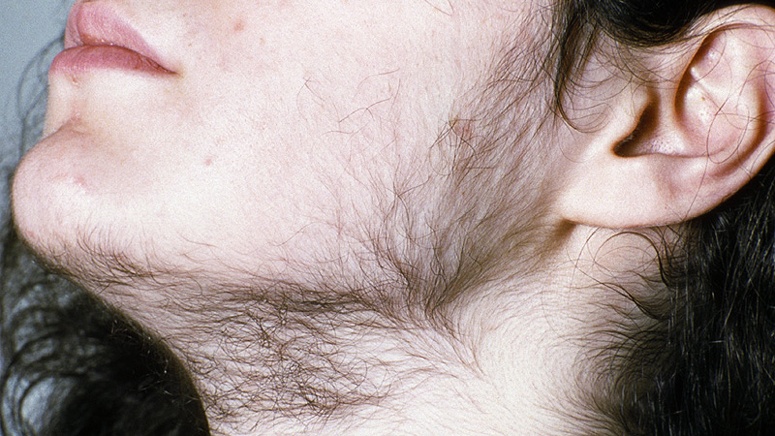
- Hair growth: Studies show that more than 70% of women with this condition grow hair on their body, face, and belly. Excess hair growth is clinically referred to as hirsutism [3].
- Headaches: Recent studies show that hormonal changes can cause headaches in some women with PCOS.
- Acne: The male hormone (androgen) responsible for PCOS makes the skin oilier than usual and can cause breakouts on areas such as the chest, upper back, and face.
- Male pattern baldness: Women with PCOS develop thin hair on their scalp. In some cases, the hair may start to fall out.
- Darkening of the skin: Dark patches of skin may develop in body creases such as those on the neck, groin, and under the breasts.
- Weight gain: Studies show that about 80% of women with PCOS have obesity or are overweight.