
Luteal phase
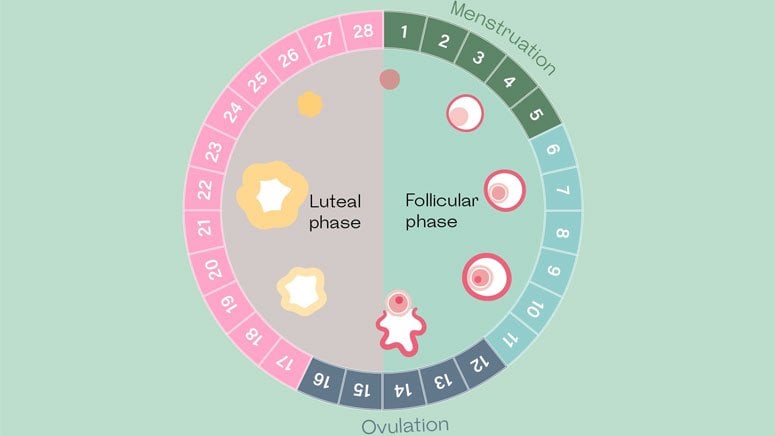
Following ovulation [2], the luteal phase lasts for the remainder of your cycle and ushers in the hormonal extravaganza.
At this stage, estrogen has a slight second spike, but progesterone enters the scene and brings with it a number of physiological symptoms, which is more significant.
When progesterone [3] rises at the end of the luteal phase, if you are not pregnant, both progesterone and estrogen begin to decline, which tells your brain that your period will start and a new cycle will commence.
Now that we have a basic grasp of the hormonal alterations that characterize the menstrual cycle, let’s discuss more about the physiological effects that may have an impact on your workout attempts.